Portrait of a Lady on Fire (2020)

⭐️⭐️⭐️⭐️⭐️⭐️⭐️⭐️⭐️

9/10
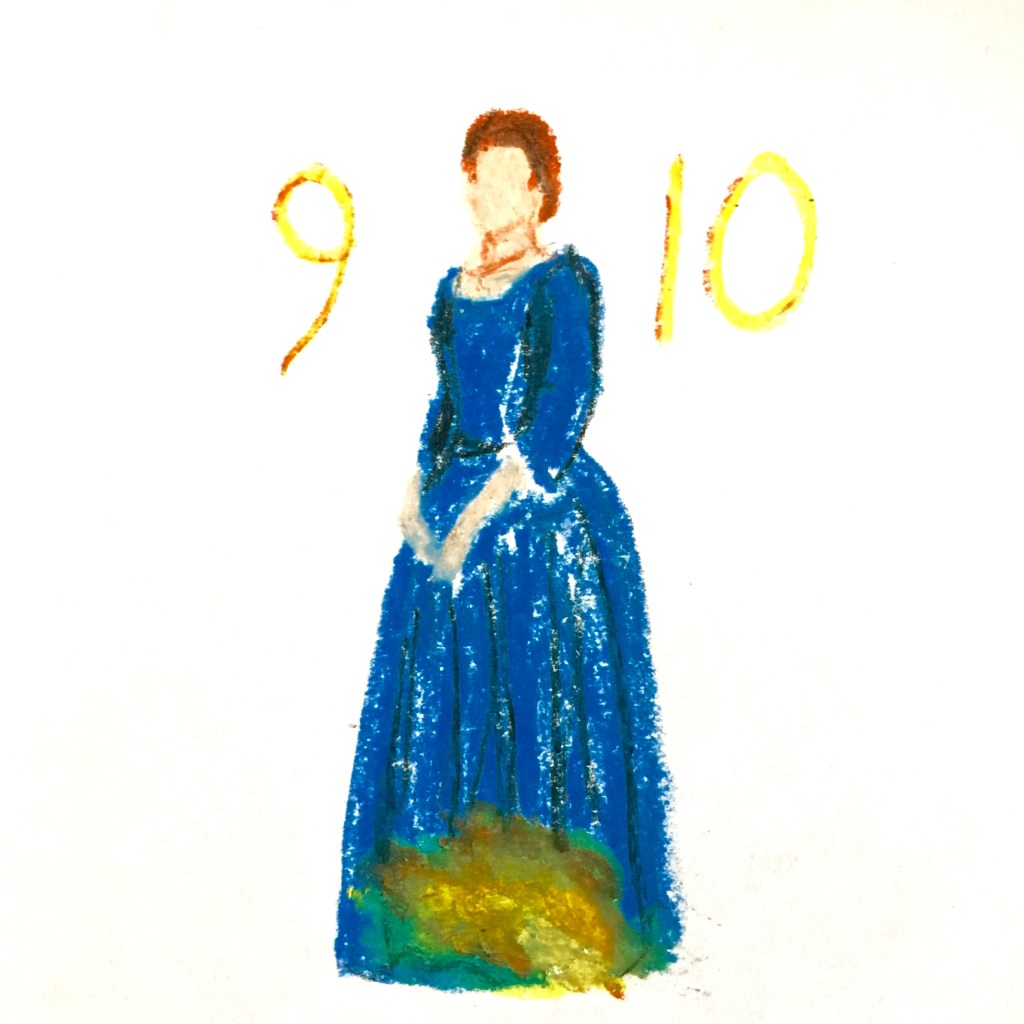
An enchanting and groundbreaking study of falling in love and the Female Gaze. Although set two-and-a-half centuries ago, it is a timeless story at once articulate and sensual, enlightening and breathtaking.

For her fourth feature, writer-director Céline Sciamma set out to create a lasting love story, something of a departure from her contemporary, coming-of-age tales, but nevertheless retaining their reticent realism and themes of gender, freedom and selfhood.

In 1770s Brittany, portrait artist, Marianne (Noémie Merlant), travels to a rugged island inhabited only by women to undertake a wealthy widow’s commission to paint her daughter, Heloïse (Adéle Haenel). On its completion, the portrait will be send abroad to a potential suitor, deciding the fate of its subject. Marianne’s task is made more difficult by the fact that Heloïse refuses to marry and so refuses to be painted. Marianne must pose as Heloïse’s companion and make mental notes of her likeness to commit privately to canvas. During their time together, Marianne becomes increasingly intrigued by her taciturn subject, and Heloïse more curious about the meaning behind her companion’s incessant glances, sparking a scintillating love affair.

When a great trend for portraiture erupted in the eighteenth century, hundreds of women worked as portrait artists and were forgotten by history. Instead of telling just one of their true stories, Sciamma has created a fictional character to represent them all at once. As the winner of the screenplay award at Cannes, Sciamma’s script creates a fusion of intellect and emotion, not only through dialogue but what is written into the silences.

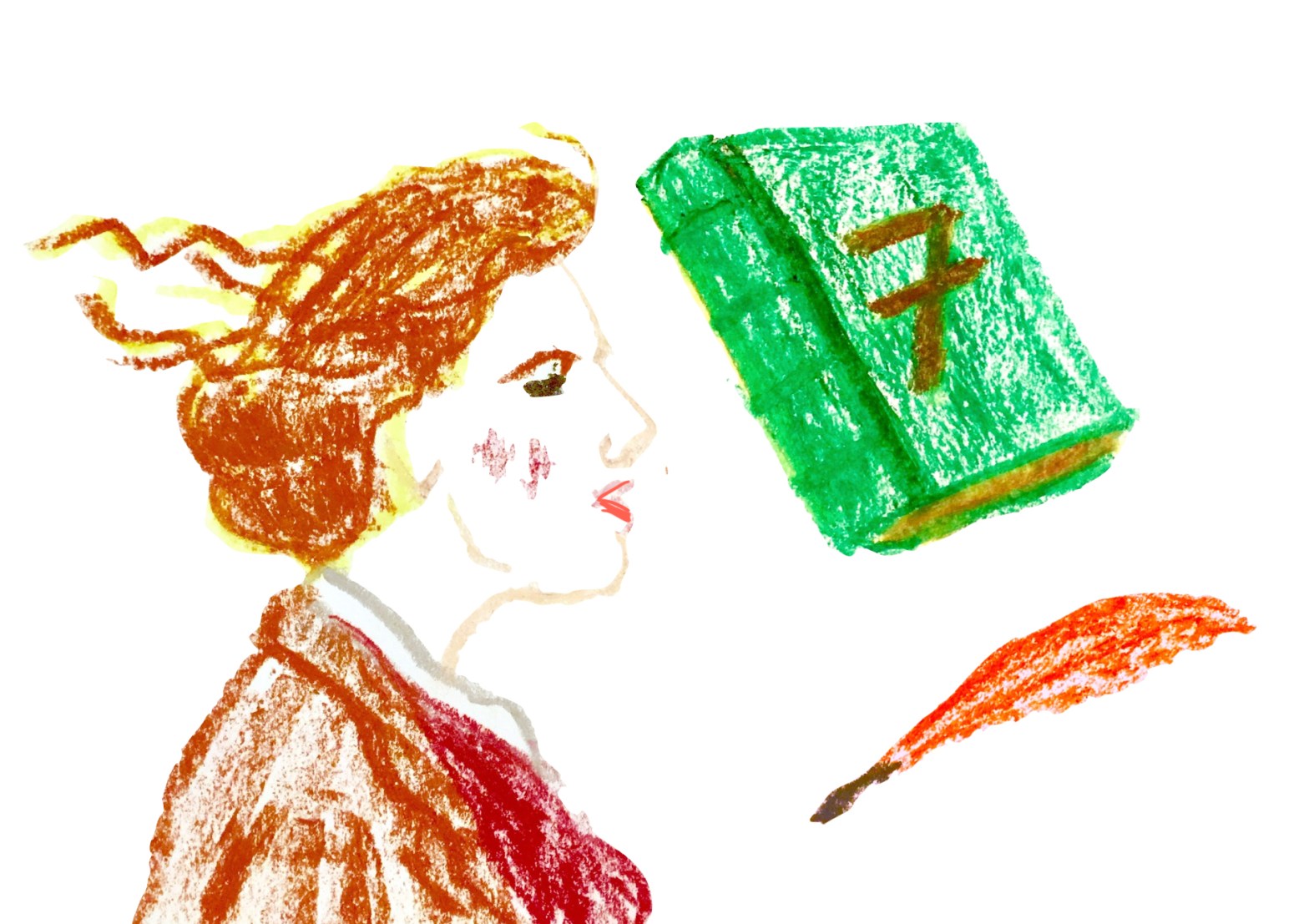
Through the act of portrait painting between two women, a study is made of the Female Gaze, a concept that overthrows the patriarchal voyeurism of the conventional Male Gaze in art by valuing equality and privacy. Sciamma gathered an all-female cast and crew for the film and wrote a script rejecting the idea of the ‘muse’, implying a certain slavery to the artist. At one point, Heloïse alerts Marianne to the fact that she as the model has been studying her just as intently. The privacy of the Female Gaze is shown (or rather not shown) in Sciamma’s resistance to revealing Heloïse’s face to Marianne and the audience, mystery initiating desire.

As with all the greatest love stories, their romance is a by-product of the film, not its sole focus. The painting process incites their passion. Haenel and Merlant both give powerful, nuanced performances and have perfect chemistry. There were no rehearsals, and on the first day of shooting, they knew each other by little more than name, getting to know each other through the filming process.

Claire Mathon’s cinematography is sublime: landscapes are epic and painterly, and actors are framed like the subjects of masterful portraits. The long takes create suspense while encouraging viewer’s to study what they see as an artist does. The aural sparsity of the film places emphasis on the beauty of sounds and magnifies the emotional intensity of music when it does appear, putting the modern-day viewer in the place of the characters living when any genre was not instantly available to listen to on demand.

As a film with a lot to say, it treads the precariously thin line between story and allegory, a self-awareness sometimes emerging in the script. The climactic argument between Héloïse and Marianne feels slightly forced, like a mechanical turning point. But the beauty and freshness of the film make these almost excusable. The story is not about the social acceptance of their love, either, but their private experience of it. The historical feels modern, Sciamma has created a timeless musing on what it is to love, be free and be equal, while portraying an amorous relationship that is sure to go down in cinematic history. Profound and sublime.

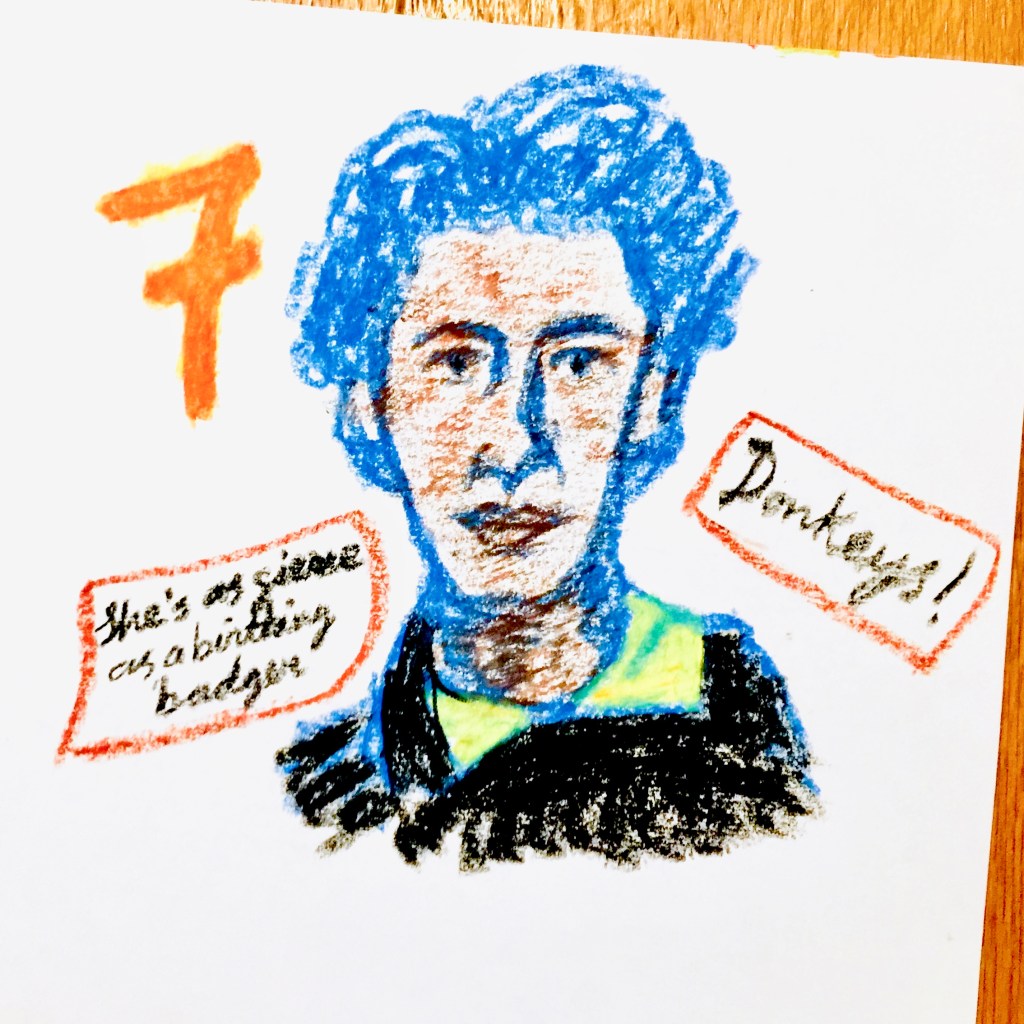
The Lighthouse (2020)

⭐️⭐️⭐️⭐️⭐️⭐️⭐️⭐️⭐️

9/10

The Lighthouse is an awe-inspiring testament to the silver screen while remaining utterly original. Caught between arthouse and the thriller genre, it crashes through you until you’re hollowed out and chilled to the bone.

From the outset, it’s clear that music and sound, barely distinguishable in The Lighthouse, will be as fundamental to the viewing experience as the visuals. From the unsettling moans of the fog horn to the heart-stopping shrieks of the mermaid, sound plays a crucial role in creating the film’s unsettling tone and amplifying the constant peril experienced by the two lighthouse-keepers, or ‘Wickies’ in 1890s slang.

Like all great films, its premise is simple: slovenly yet silver-tongued Thomas Wake (played by the ever-talented and -terrifying Willem DeFoe) is joined by his new assistant, the secretive, young Ephraim Winslow, Robert Pattinson giving an impressively-disturbing performance of violent psychological deterioration. They are uneasy living companions during their four-week posting at a New England lighthouse when a relentless storm leaves them stranded with dwindling provisions just as they are about to disembark.

At 36-years old, director Robert Eggers brings us his second feature after the acclaimed 2015 film The Witch. Eggers collaborated on the script with his brother, drawing from multiple real-life accounts of 19th-century lighthouse-keepers and fictional sources that include the writing of Herman Melville and Edgar Allan Poe. This extensive research is evident in the details that combine to create the film’s rich and rugged texture, augmented by the dedication to film on real sets and in the brutal weather conditions we see on screen.

There is a strong theatrical essence, almost Beckett-like, in the way that the actors connect with each other and perform dialogue (Eggers was previously a theatre set designer). Yet, it has much more in common with the traditions of cinema, without attempting to imitate any particular film. The academy screen ratio that is adopted (a square format) accentuates the theme of claustrophobia and places the actors closer together when they share the frame.

Jarin Blaschke’s cinematography makes the film’s horror all the more insidious by showing how beauty can be found in the ugliest and darkest of places. The lighting is dramatic, at times bearing stark resemblance to charcoal drawings and at others, film noir classics, without compromising on the realism. From the opening shot, emphasis is placed on visualising emergence and submergence to reflect the characters’ descents into madness. Their gradual loss of sanity is evoked so well that you soon find yourself panicking at the uncertainty of what is true, what is dreamt and what you’re being deceived about.

By the end, you feel as if you’ve been drawn into the formidable waves, having tumbled through them and been lashed against the rocks that lighthouses are built to help people evade. But this is of course the film’s central musing: some things that you try to keep your distance from will find a way of luring you into a fatal obsession with them. By the end of The Lighthouse, horror and awe reverberate through your bones; a cinematic experience strictly for the big screen.

The Personal History of David Copperfield (2020)

⭐️⭐️⭐️⭐️⭐️⭐️⭐️

7/10

A relentlessly charming celebration of diversity, creativity and inspiration. Armando Iannucci’s wacky take on the Dickensian classic is led by a sparkling cast that brims with vim and vigour but fails to develop any meaningful character relationships.

The theatrical essence of the film is clear from its opening scene. The titular character, brilliantly played by Dev Patel, steps onto a stage to recite his life story to an attentive audience before stepping through the painted backdrop into the scene of his own birth. There are several other creative transitions throughout to make any film or art lover swoon, reminiscent of Joe Wright’s 2012 adaptation of Anna Karenina. In a similar vein, it takes liberty with its source text, conjuring up an almost entirely new though no less worthy story with all the same themes and messages. If possible, it’s deserving of being critiqued as an original rather than as an adaptation, for it has its own distinct merits that may be harder to see if cross-examined with another story, especially one as epic as David Copperfield.

As the lynchpin of this coming-of-age comedy-drama, Patel (in the seemingly-perpetual role of the aspirational underdog) shines with his usual charisma as the adolescent hero. Ranveer Jaiswal, who plays a younger David, is equally triumphant as the inquisitive boy who begins a lifelong hobby of collecting the idiosyncratic sayings of the people around him. Relishing the wit and imagination that they reveal, his collection becomes a motif that embodies the film’s overall celebration of language and creativity, as well as diversity, clearly reflected in the film’s casting. 

Individually creditable performances are made across the board by veterans and newcomers alike. They each deliver the chirpy comedy peppered throughout Simon Blackwell’s hilarious script with effortless expertise, yet the relationships built between them fall mostly flat. By the time tensions reach their climax, a lack of investment becomes evident. Perhaps this is due to the inordinate cast size. Although normal in Dickens, it is highly abnormal in feature films, for good reason. Alongside this, there is no central, constant relationship developing from start to finish (the choice to double-cast Morfydd Clark as Copperfield’s mother and love interest may have been a conscious attempt to solve this). Rather, the film charts a sequence of rather disparate episodes in Copperfield’s life, populated with a shifting cast. Ben Wishaw and Aneurin Barnard give the most complex performances as the film’s main antagonists, but their mischief never quite seems to push the stakes high enough with the overall lack of emotional attachment to the hero and his troupe.

Although stunningly eccentric and constantly entertaining, it goes to prove that charm, wit, humour and spectacle are not enough to keep a film afloat, but regardless of its flaws, it is still a hugely-enjoyable film full of colour, revelry and inspiration that will blow away the last of any January cobwebs.

Emma. (2020)

⭐️⭐️⭐️⭐️⭐️⭐️⭐️⭐️⭐️

9/10

With the rhythm of a picturesque carriage ride through the country, there is always something to keep your attention in August de Wilde’s new adaptation of Austen’s comedy-satire. Perky, fresh and finely-tuned.

The comedic aspect of the story is certainly emphasised in De Wilde’s take. Although some jokes fizzle out before they can pop, there is still a continual supply of laugh-out-loud moments. Eleanor Catton’s script rumbles along at an entertaining pace and is full of heart as well as acetic Austenian wit, impressive for her debut feature.

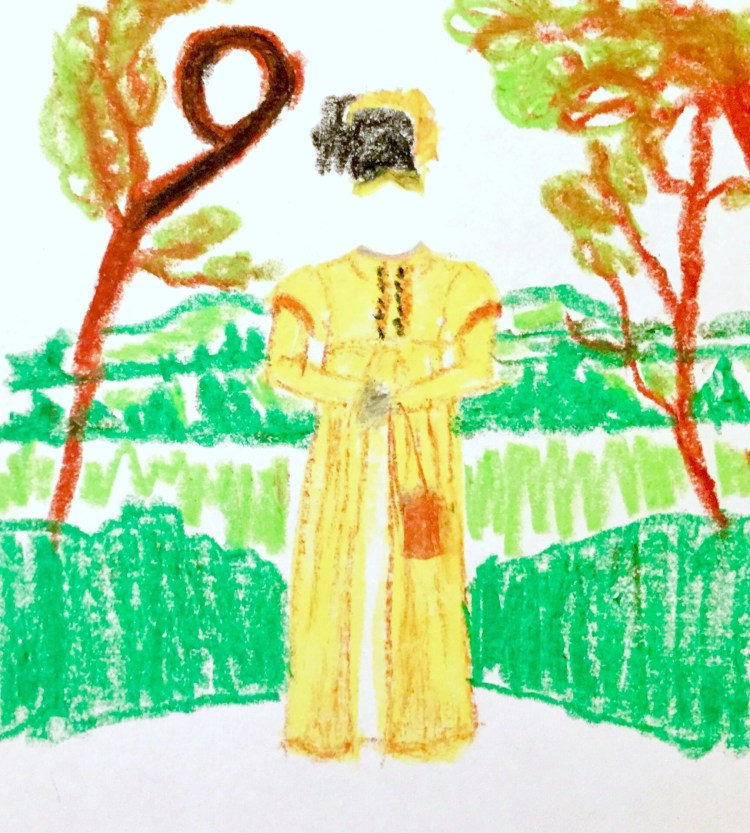
The production and costume design is top-tier, as well. Indeed, watching the film feels like being on a two-hour tour of a world-class patisserie, or else a Regency-themed fashion shoot, which makes sense on learning that De Wilde made her directing debut on a film series for Prada. The film charts the course of a year in Emma’s life, but each scene is as crisp and vivid as a spring morning (prepare to be smothered with pastels). As well as capturing a fresh vividness and creating a raft of satisfyingly symmetrical shots, cinematographer Christopher Blauvelt makes a bold move by creating several close shots of actors looking straight to camera, which establishes much stronger intimacy for viewers with the film’s nineteenth-century characters.

The slight caricaturing of the acting and visuals brings us that much closer to the absurd reality of upper-class Regency living without subtracting from the measured and heartfelt performances. Anya Taylor-Joy is magnetic and commanding in the titular role as the entitled, young matchmaker, achieving the perfect balance between charm and superiority, much like a more amiable Scarlett O’Hara. Actresses in previous adaptations have downplayed Emma’s vanity, but Taylor-Joy bravely and quite-rightly injects a stronger hint of it into her rendition. Austen believed this particular heroine of hers to be someone ‘whom no-one but myself will much like,’ but Emma’s fallibility is her most appealing quality as a character. Of all Austen’s protagonists, she is the most modern, sharing much in common with today’s Generation X for her fiercely-independent spirit, obsession with aesthetics and keen social finesse.

Chemistry fizzles between Taylor-Joy and Johnny Flynn as Emma’s wealthy neighbour, Mr Knightley, their relationship being ‘not too much like brother and sister’ so as to inhibit a degree of flirtation from the off. Bill Nighy’s pleasure at playing Emma’s widowed, hypochondriac father is palpable as he delivers whip-smart lines with a flair of his coattails as well as scenes of tender feeling. Miranda Hart slots right in to De Wilde’s Austenian universe as the overbearing though kind-hearted Miss Bates, moving seamlessly from the flailing farcicality she is loved for to touching melodrama. Rising-star Josh O’Connor, too, is both hilarious and odious as the local young vicar, Mr Elton. Mia Goth plays Emma’s gauche friend and matchmaking pawn, Harriet, who has an obscured heritage that may or not make her the daughter of a gentleman. The excessive childishness that Goth performs with, however, makes it confusing as to why the image-conscious Emma finds sincere friendship in her company and invites the assumption that Emma is faking kindness towards her until this is disproved much later on. 

The most compulsory motif of any Austen adaptation, the ballroom dance scene, is staged in an incandescent setting worthy of a million-pound wedding venue. The tangled feelings that characters have for one another are clarified through subtly-expressive movements and graceful camerawork. In addition, the table-turning line delivered by Taylor-Joy at the crux dramatic moment is acted and reacted to so perfectly that there were audible gasps from the cinema audience, bearing equal testament to the success of the preceding scenes at building emotional investment.

It’s as sumptuous a film as it is elegant, concerned with the many forms and routes that friendships can take and with what it means to be a good person. It’s joyous, thoughtful and engaging; in other words, as Austen would say, bearing all the desirable accomplishments of a period drama for today.

1917 (2020)

⭐️⭐️⭐️⭐️⭐️⭐️⭐️⭐️⭐️⭐️

10/10

35mm — 1917 is what cinema was made for. It’s relentlessly impressive, at once innovative and reminiscent of a classic. The bold cinematography pairs with a wholly-satisfying story to create a richly-textured, life-affirming film.

Although it successfully creates the illusion of unstructured reality, it rigorously adheres to rules of narrative. The story couldn’t be simpler: Lance Corporals Blake (Dean-Charles Chapman) and Schofield (George MacKay) are charged with delivering a message across perilous terrain to warn a regiment that they are headed into a trap. Their failure means the imminent deaths of hundreds of soldiers, including Blake’s brother. There’s a task, a series of trials laced with a minefield of shock and suspense, a meditative pause, and a final cranking-up of suspense on the road to resolution. ‘Simple’ is offered here as high praise, for it requires true crafting of the script for a story to be both simple and inherently fulfilling.

As Einstein supposedly said, ‘The definition of genius is taking the complex and making it simple,’ and in 1917, Sam Mendes, with co-writer Krysty Wilson-Cairns, has taken the broadest, most complex themes of all and filtered them down to their purest truths. The characters we meet are both types and individuals: Schofield is the stoic, cynical soldier, ashamed of being awarded for valour and blinded by the war (at one point, literally) to any real value in life. On the other end of the scale, Blake embodies the spirited, young soldier whose love for his family and home lead him steadily onward.

The film’s relatively sparse dialogue – as to be expected in war films, as in war itself – really only serves one of two purposes: to inform and give orders, or to tell stories. It’s a self-reflexive film in the way it emphasises the value of storytelling to human life. Characterisation is arguably developed more through action than speech. What speech really serves to do in the film is represent human connection, reminding us of how it is the backbone to life. The words themselves aren’t important so much as the action of speaking, the comfort of a voice, the desire it indicates to connect.

The illusion sustained throughout of a single-shot is not simply a gimmick employed to win the Academy Award for ‘best cinematography’ (though it almost certainly will) but purposefully enhances the viewing experience. It’s hard not to be taken out of the film at times to guess where shots have been stitched together and to wonder how it’s been done, but this is an easily-forgivable side effect in comparison to the immersion that the apparent seamlessness instils. The camera’s flowing movements are executed like a dance, mirroring those of the actors’ as they fall behind or race ahead of one other. The graceful execution hints at acutely planned and practiced choreography, as there must be with such long takes, yet the attention this draws to its nature as a performance is never detrimental to its illusion of realism.

MacKay and Chapman give powerfully candid and resultantly magnetic performances, outstanding in the way that they carry much of this sweeping spectacle of a film. But, really, the acting of every single soul in each shot is remarkable. As we pass through the tranches, hundreds of lives are glimpsed, each man convincingly suggesting that they have their own story as worthy of following as the film’s protagonists’. One savours a tin of food, another smiles to himself while reading a letter from home, yet another is hunched on the ground, staring into space with a haunted expression. In these brimming shots, there’s the sense that the camera could branch off and follow any one of them.

It does seem like a bit of an inside joke, however, when Richard Madden turns up at the end as Chapman’s brother, both actors performing as kings of rival houses in Game of Thrones and, more ludicrously, meaning to bear close resemblance to one another. These casting issues momentarily take you out the film’s universe. The same effect occurs with the momentarily-suspended reveals of A-list actors such as Colin Firth, Mark Strong and Benedict Cumberbatch. Accumulatively, it feels as if they might have all just decided to get together for a reenactment away-day. This, though, is a pitfall of most major films: casting familiar faces to entice viewers.

In many ways, it could be compared with The Revenant. In terms of theme, grittiness and cinematography, they are brothers. I prefer 1917, however, for its triumph of tenderness and MacKay’s restrained performance. It is an experience that should only really be lived through with IMAX. The visual details recreate a texture of horror in the various landscapes the camera passes through, and contribute to the film’s spectacle, which is perfectly balanced with subtly and introspection. As much as being about the experience of the First World War front-line soldiers, it’s about the life it served to protect, and its symbolism layer conveys this perfectly. The motif of trees in particular serves to evoke themes of connection, peace and hope. Passing through a cherry tree orchard on an abandoned farm, the two soldiers find that each and every tree has been chopped down. But, Blake informs Schofield with triumphant satisfaction, at least double will grow back when the scattered seeds grow. The final image sees Schofield resting up against a lone tree with a hollow trunk and broad green boughs, symbolising his redemption of spirit. He at last concedes to letting himself remember his family and hope that he might still return to them.

Jojo Rabbit (2020)

⭐️⭐️⭐️⭐️⭐️⭐️⭐️⭐️⭐️

9/10

Jojo Rabbit is a real treat, a laugh-out-loud comedy offering a refreshingly clever and creative take on a part of history we know so well. It’s vivid, heartwarming, expertly crafted and relentlessly enjoyable.

The film follows Jojo Betzler, a young Hitler-Youth recruit, whose best friend and imaginary companion is his hero, Adolf Hitler, embodied by the film’s own writer and director Taika Waititi. At a training weekend, he badly injures himself, leaving him scarred, crippled and excluded. His mother Rosie – played by a sparkling Scarlett Johansson – is often out of the house on mysterious business, leaving Jojo home alone while he convalesces. During this time, he discovers that she has been hiding a Jewish girl in the walls of their house, who he eventually finds himself befriending, making him question his knowledge, beliefs and allegiances.

It may seem like we’ve heard this story before, but although this part is predictable, it joins with the well-designed narrative shocks in other places and squirm-worthy scenes of suspense to make a wholly satisfyingly film.

What’s especially appreciable is that it has a strong moral core without ever being preachy or putting its story and characters second. It sends us timeless proverbial messages that we are always in need of being reminded of: to do what we can, and to never stop dancing. It’s about perspective as well, learning to see for yourself when the temptation to see through someone else’s eyes in order to fit in is overwhelmingly strong.

Although the ghostly presence of Jojo’s deceased sister felt a bit too convenient at times, and more could have been made of the fact that the Nazi’s were as much for annihilating cripples from society as Jews, it has a near-perfect screenplay for its backbone.

The central performances are all standout, and the love between the characters feels real. The additional appearances of the likes of Rebel Wilson and Steven Merchant add extra spice to the film’s comic side, as well.

The visuals are relentlessly captivating, providing a rich layer of meaning to be picked apart in repeat viewings. There is a stagnant stillness and a vividness in the process of fading that feels like a dash of Wes Anderson has been washed over the film stock.

Although it’s probably more likely to call itself a comedy, Jojo Rabbit is a shining example of a new kind of historical drama for our age. In line with The Favourite, it uses history as a vehicle through which to tell a story for today, not trying to give us facts so much as playing with the past to give us truths.

Regardless of the controversiality it has garnered, it is an anti-hate satire so can’t tip-toe around the matter. It tackles discrimination head-on with blunt humour and emotional intelligence. Cleverly, the most horrifying things in the story are obscured and treated with sensitivity. It’s highly emotional in more heartwarming ways than heartbreaking ones, though there are plenty of those too.

It’s genuine humour, brimming tenderness and enchanting visuals are so enjoyable, that during the last scene, I found myself wailing inside, for I really didn’t want it to end.

Little Women (2019)

⭐️⭐️⭐️⭐️⭐️⭐️⭐️

7/10

Greta Gerwig’s adaptation of Louisa May Alcott’s nineteenth-century classic novel is not as revolutionary as it’s being made out to be, but it is vivid and inspiring, grounded by stellar performances.

The visual splendour of the film is by all accounts the star of the show. The screen is constantly either glowing or sparkling. At points, I would have preferred to turn the sound off in order to enjoy it even more. At times, the script feels like a rushed review of the novel’s events, often stuck in the habit of telling rather than showing, but the proverbial remarks are delivered in a way that makes them potent rather than fluffy.

Ronan is relentlessly captivating as Jo, expertly channelling her formidable willpower, sizzling creativity, stubborn temper and eventual vulnerability. Her chemistry with Timothée Chalamet as Laurie is electric, making it easy to get lost in the scenes devoted to just them. Florence Pugh gives a magnetising performance as Amy, on par with Ronan, though it would have been better if they had cast another actress for younger Amy as they did in the 1995 version. Eliza Scanlan conjures Beth’s aura of gentleness, and Laura Dern conveys Marmie’s practiced veneer of meditative togetherness well. Emma Watson’s failed attempt at an American accent is frustrating distracting, however, and she is unimpressive beside her co-stars – especially Ronan, who nails the regional Concord accent.

The intercutting of two timeframes is presumably meant to be a modernising element, but if viewers aren’t already familiar with the story, it may only have a disorientating effect. Even as someone who is familiar with it, I felt unsure what was happening when. It does add power to certain scenes by emphasising the parallels between life’s happier, innocent times and it’s bleaker moments, but it feels almost like spoon-feeding too, and isn’t quite enough to counter its complicating effect on the plot.

The film is branded as a modern take on the beloved story, but the only real touch of innovation or contemporaneity is in the ending. Without giving too much away, it is certainly very clever and makes the whole film worth the watch for it alone. It changes the story without changing it at all in order to fashion it into an undeniably feminist narrative, while also serving to emphasise the tentative yet constant link between real life and fiction. It is not by any means a bad adaptation, and the story seems to only be getting richer with age, so Gerwig’s revisitation of it should be warmly welcomed, as it is.

Design a site like this with WordPress.com
Get started